Open-source passive radar

See the sky with radio echoes

RETINA — Radio Echo Tracking by Inter Node Analysis

A distributed passive radar network built on TV and radio signals. Deploy a low-cost node, detect aircraft up to 35 miles away, and contribute detections to an open, community-powered map.

TV Transmitter VHF/UHF TV & Radio Target REF SURV RETINA Node Pi 5 + RSPduo direct signal illumination echo Δt → range & velocity
35 mi
Detection range
VHF/UHF
TV & radio bands
ADS-B
Validated tracks
100%
Open source
How It Works

No transmitter needed

RETINA uses existing TV and radio broadcasts as illumination. Each node listens for direct signals and their echoes bouncing off objects in the sky.

01

Capture

Two off-the-shelf antennas feed an RSPduo receiver — one captures the direct reference signal from a TV or radio transmitter, the other captures surveillance echoes reflecting off objects.

02

Detect & validate

A Raspberry Pi 5 running a custom OS correlates reference and echo signals to detect objects. Detections are automatically validated against ADS-B data from known aircraft.

03

Aggregate & track

Each node uploads detections to a central server that fuses data from all nodes into a global map with automatic multi-object tracking and anomaly detection.

Example Output

Real detections validated with ADS-B

Live node local display of SNR, bistatic range and target doppler shift.

ADS-B targets
Radar detections
Capabilities

Built for distributed sensing

Purpose-built for passive radar with everything you need to deploy and contribute.

Passive detection

No transmitter, no license. Uses existing TV and radio broadcasts in the VHF/UHF bands as illumination sources for bistatic radar.

Distributed network

Multi-node data fusion provides broader coverage, better accuracy, and resilience against single-point failures.

ADS-B calibration

Continuous validation using ADS-B transponder data from commercial aircraft. Verifies accuracy against known truth data.

Anomaly detection

Automatic identification of objects that don't match known aircraft behavior, flagged for further analysis.

Global map

All detections aggregate into a shared real-time map. View tracks, coverage, and network status from any browser.

Open data

All code is open source. All detection data is accessible to users and published regularly.

Hardware

RETINA node kits

Everything you need to deploy a node. Just connect the components, follow the setup wizard and attach two off-the-shelf TV or radio antennas. (Note: US shipping only. User assembly and radar upgrade required. No export or re-export from the US after assembly.)
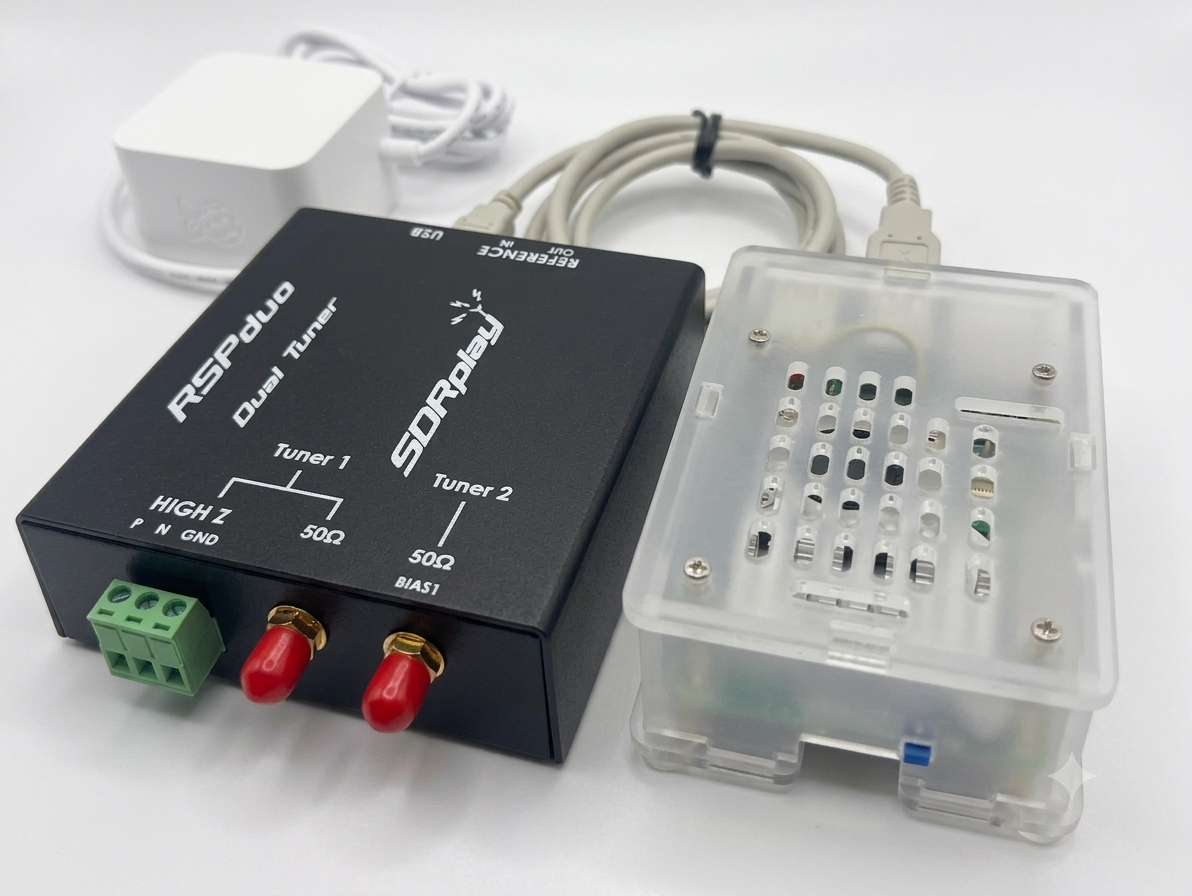
Complete kit
RETINA Node Kit

Single Node — Guided Deployment

Your SD card comes pre-installed with OWL OS. The included setup wizard is a no-code walkthrough of upgrading to radar capability, antenna arrangement, and initial network connection. The kit includes:

  • Raspberry Pi 5 (2GB RAM) with cooling case & power supply
  • RSPduo SDR receiver with connecting cable
  • Pre-imaged SanDisk Extreme 64GB microSD
  • Premium support and remote updates
  • Enterprise-grade datastream access
$499.95

Antennas and coaxial cables not included.

Order now →

Secure checkout via Stripe

Multilateration kit
RETINA Multilateration Kit

Dual Node — Multilateration

Two complete RETINA node kits paired with an antenna cable splitter, letting a single antenna feed both receivers simultaneously. Enables multilateration — using the time difference of arrival between two nodes to resolve target position with greater accuracy.

  • Two complete RETINA node kits
  • RF cable splitter for shared antenna feed
  • Two Raspberry Pi 5 (2GB RAM) with cooling cases & power supplies
  • Two RSPduo SDR receivers with connecting cables
  • Two pre-imaged SanDisk Extreme 64GB microSDs
  • Premium support and remote updates
  • Enterprise-grade datastream access
$899.95 Save $100

Antennas and coaxial cables not included.

Order now →

Secure checkout via Stripe

Community

Open source. Open data.

All code is freely available. All detection data is accessible and published regularly. RETINA is built in the open, by the community, for the community.

Open source code
Open detection data
Community driven